

How to Tell If Your Roof Has Hail Damage After a Utah Summer Storm
August 5, 2026
•
Written By
Definitive Construction
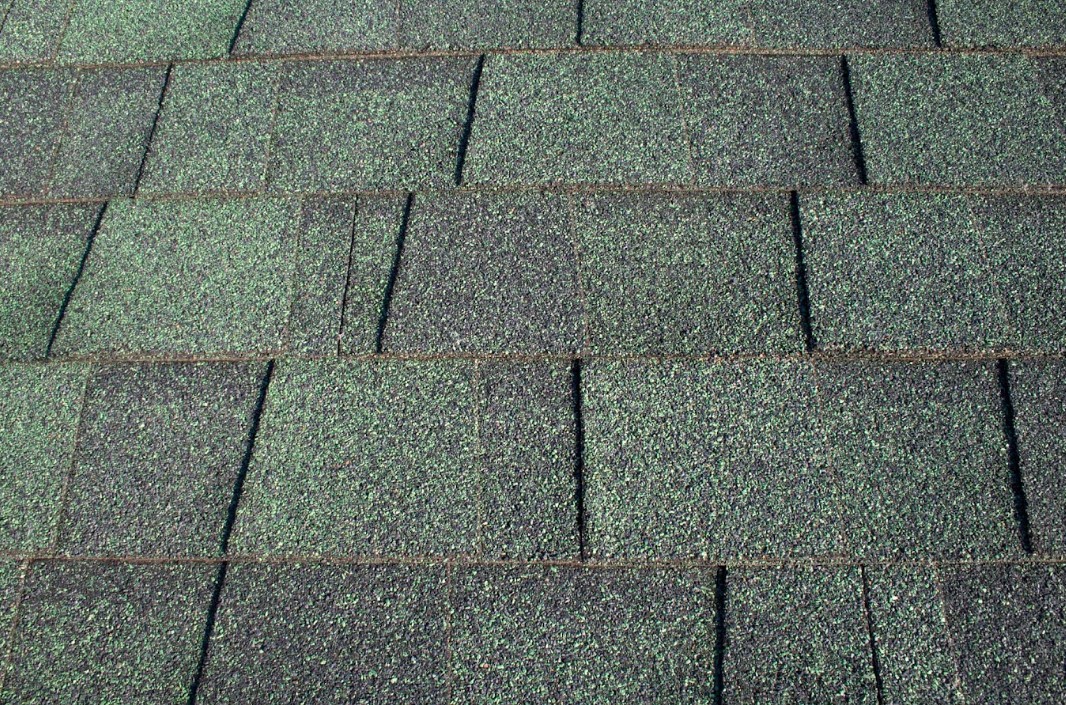
Utah summer storms can move through quickly. One minute, the roof is baking in the afternoon sun, and the next, you are listening to hail hit the windows hard enough to make everyone in the house look up.
Once the storm passes, the roof may look completely normal from the driveway. That does not always mean it came through untouched.
Some signs of hail damage on a roof are easy to spot from the ground. Others require a closer inspection because normal aging, old repairs, and true hail impacts can look surprisingly similar. For homeowners in South Jordan, Salt Lake City, and elsewhere along the Wasatch Front, the goal is not to assume the worst. It is to know which signs deserve attention.
In this post, we’ll cover:
- What hail damage can look like from the ground
- Which signs usually need a professional inspection
- What can be mistaken for hail damage
- When storm damage calls for repair or replacement
- What to know before filing an insurance claim
- Whether impact-resistant shingles are worth considering
If the storm left enough evidence to raise questions, Definitive Construction can help determine what actually happened overhead.
The Short Answer: What Are the Signs of Hail Damage on a Roof?
Hail damage can appear as displaced shingle granules, bruised or fractured asphalt shingles, dents in gutters or vents, cracked roofing materials, damaged flashing, and new leaks after the storm.
The most useful clue is usually not one mark. It is a pattern.
If the gutters are dented, leaves have been shredded, outdoor metal surfaces show signs of impact, and the shingles have fresh dark spots, that tells a much stronger story than one questionable mark on an older roof.
Start With the Property Before You Start With the Roof
You can learn a lot about a hailstorm without climbing a ladder.
Once conditions are safe, walk around the property and inspect surfaces that are easier to reach than shingles. Cars, patio furniture, gutters, downspouts, window screens, siding, fencing, and exposed metal can all indicate whether the storm had a meaningful impact.
Look for fresh dents, torn screens, chipped paint, damaged plants, or loose debris around the home.
This does not prove the roof is damaged. It does indicate that the property sustained enough impact to warrant a closer look.
That distinction matters. A few small hailstones hitting the driveway is one thing. A storm leaving dents across the downspouts and shredded leaves across the yard is another.
Signs of Hail Damage You Can Check From the Ground
The safest first inspection is the one that keeps your feet on the ground.
Fresh Dents in Gutters and Downspouts
Soft metal often shows hail impact more clearly than asphalt shingles.
Check gutters, downspouts, exposed flashing, and metal trim for dents that were not there before the storm. Fresh impact marks on several sides of the home can help establish how the hail moved across the property.
Dented gutters do not automatically mean the shingles are damaged, but they are one of the better reasons to have the roof checked.
Granules Collecting Near the Roof Edge
Asphalt shingles naturally lose granules as they age. That is normal.
What gets our attention is a noticeable amount of fresh granule loss immediately after a storm, especially when it shows up near downspouts or along the ground below the gutters.
Hail can knock granules loose, exposing the darker asphalt beneath. On an older roof, however, granule loss may already be happening before the storm, so this sign needs context.
Missing or Lifted Shingles
Hail and wind often arrive together.
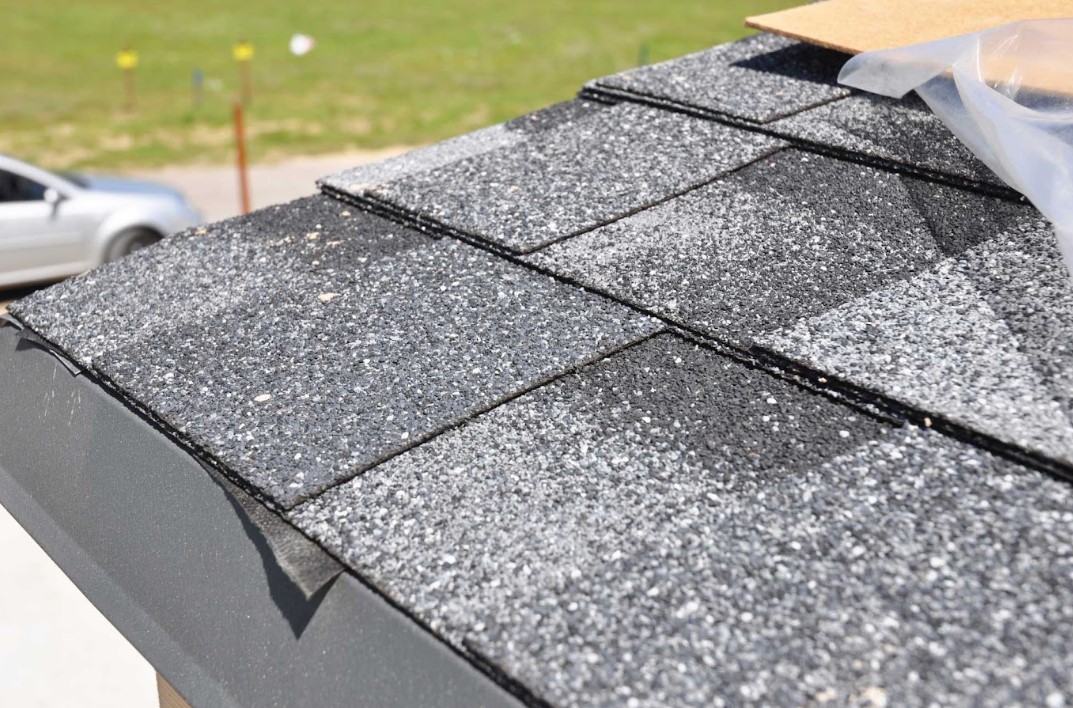
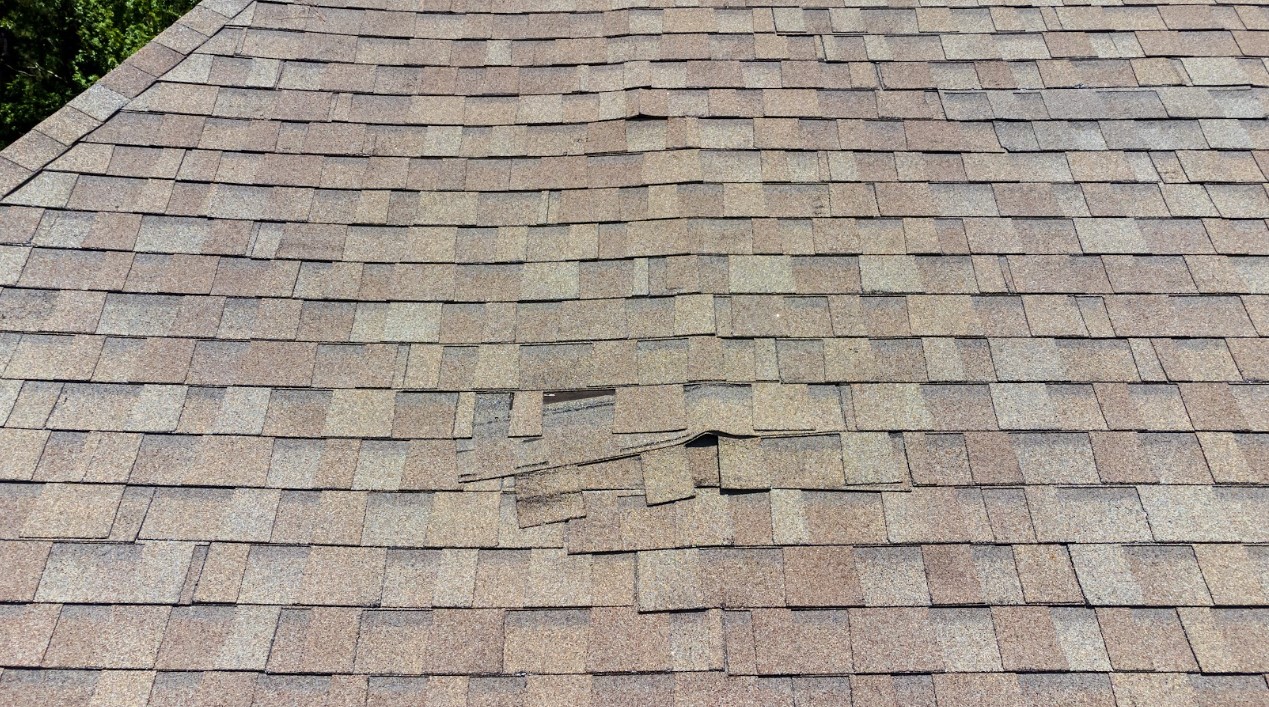
From the ground, look for shingles that appear lifted, crooked, missing, or out of line with the surrounding roof. You may also notice exposed sections where a tab has torn away.
This type of damage is often associated more closely with wind than hail, but it still matters after the same summer storm.
Do not climb up and press a loose shingle back down. It is unlikely to appreciate the help.
Damage Around Skylights, Vents, and Flashing
Roof penetrations deserve attention because they already represent transition points in the roofing system.
Hail can dent metal vents, damage skylight trim, crack certain components, or affect flashing around chimneys and wall transitions. Wind-driven rain can also expose an existing weak point that had not caused trouble before.
If a leak appears shortly after a storm, these areas should be part of the inspection.
Hail Damage Signs That Usually Need a Closer Inspection
Some of the most important hail damage is difficult to confirm from the driveway.
This is where a professional hail damage roof inspection becomes useful.
Dark Impact Marks on Asphalt Shingles
A hail impact can knock granules away and expose darker asphalt underneath. That may create a circular or irregular dark spot on the shingle surface.
The problem is that old wear, blistering, foot traffic, and previous damage can create similar-looking marks.
A trained inspector should consider the pattern, location, surrounding materials, and condition of the shingle rather than making a decision based on a single dark spot.
Bruised or Soft Shingle Areas
Some hail impacts affect more than the surface granules.
The asphalt or reinforcing mat beneath the surface may be bruised or fractured without creating an obvious hole. These areas can be difficult to confirm visually from the ground and may require close physical inspection.
That does not mean every soft or worn spot is storm damage. Roof age and existing material condition still matter.
Cracks and Fractures
Certain roofing materials can crack under impact.
Tile, slate, skylight components, ridge materials, and some asphalt shingles may show fractures after severe hail. Cracking deserves attention because it can create a direct path for moisture or weaken the material to the point of failure later.
Damage to Ridge Caps and Roof Edges
Ridge caps and roof edges can take direct storm exposure and may show damage differently from the main roof field.
An inspection should include these areas rather than focusing only on the middle of the roof where the shingles are easiest to see.
What Is Not Automatically Hail Damage?
This is where storm inspections can get unnecessarily dramatic.
Not every worn spot on a roof came from last night's weather.
Common conditions that can be mistaken for hail damage include:
- Normal granule loss on aging shingles
- Asphalt blistering
- Foot traffic marks
- Old patches or repair areas
- Manufacturing irregularities
- Wear around roof penetrations
- Damage from earlier storms
A reliable inspection should separate new storm-related conditions from existing wear.
That matters for the repair decision, and it matters even more if an insurance claim may be involved.
Does Hail Size Tell You Whether the Roof Is Damaged?
Not by itself.
Larger hail generally creates greater impact potential, but hail size is only one part of the equation. Wind speed, direction, roof pitch, roofing material, roof age, and the condition of the shingles all affect how the roof responds.
A newer roofing system may handle a storm differently than an older roof with brittle shingles and previous repairs.
Instead of asking, “Was the hail big enough?” it is more useful to ask, “What evidence did the storm leave on this property?”
That brings the decision back to actual conditions rather than guessing based on the sound of the storm.
When Should You Schedule a Hail Damage Roof Inspection?
An inspection makes sense when the storm leaves several signs pointing in the same direction.
Consider having the roof inspected if you notice dented metal surfaces, new shingle damage, fresh granules around downspouts, damaged roof accessories, or water intrusion not present before the storm.
It is also worth considering when the roof is already older.
Hail on a relatively young roof may cause localized damage. The same storm on a system with brittle shingles, worn flashing, and several old repairs can change the larger roofing decision.
During an inspection, we look beyond the obvious impact marks. Shingles, flashing, valleys, vents, skylights, roof edges, previous repairs, and visible moisture concerns all help establish what actually happened.
Drone inspections may also be useful when certain roof areas are difficult to document safely.
Hail Damage Does Not Automatically Mean You Need a New Roof
Finding storm damage and needing full replacement are not the same thing.
A roof repair may be appropriate when the damage is limited, the affected area can be corrected, and the surrounding roofing system still has meaningful useful life.
Replacement becomes more practical when hail impacts are widespread, several roof areas are compromised, or storm damage strikes a roofing system that is already heavily worn.
The condition before the storm matters.
If roof replacement is the better long-term option, the reason should be clear. Replacing an entire roof because someone found one questionable mark is not much of a roofing strategy.
What to Do Before Filing a Hail Damage Insurance Claim
If insurance may be involved, start with documentation.
Photograph visible storm damage around the property. Record the date of the storm if you know it. Save images of dents, damaged exterior materials, fallen debris, and any new interior water staining.
If active water entry requires temporary protection, take reasonable steps to prevent additional damage where it is safe to do so and keep records of the work performed.
Then review your policy and contact your insurance carrier.
A roofing contractor can inspect the roof, document its physical condition, and explain whether repair or replacement is appropriate. The insurance carrier determines whether the damage is covered and how the hail damage insurance claim is handled.
We keep those roles separate.
Anyone guaranteeing that a storm automatically qualifies your roof for replacement is getting ahead of the process.
Should You Consider Impact-Resistant Shingles After Hail Damage?
This question only becomes relevant if the roof actually needs replacement.
Impact-resistant asphalt shingles are engineered and tested to offer greater impact resistance than many standard shingles. Class 4 products represent the highest rating under the commonly used UL 2218 impact-resistance test.
They are not hail-proof.
For homeowners who have experienced repeated storm exposure, impact-resistant shingles designed for hail exposure may be worth comparing with standard architectural shingles. The added material cost can make sense when impact resistance and longer-term ownership are priorities.
Your insurer may also have its own rules or possible discounts for qualifying products, so ask the carrier directly before making the decision based on assumed insurance savings.
More importantly, remember that the shingle is only one part of the system. Flashing, decking, underlayment, ventilation, valleys, penetrations, and installation quality all influence roof performance during severe weather.
How Definitive Approaches a Post-Storm Roof Inspection
We start with what can be verified.
That means checking the roof for visible impact patterns, damaged shingles, flashing issues, dents in metal, storm-related wear, and any existing conditions that may have been present before the storm.
Then we explain what those findings mean.
Sometimes the roof needs a focused repair. Sometimes storm damage combined with existing wear makes replacement more practical. And sometimes the inspection shows that the roof sustained no meaningful damage during the storm.
All three are legitimate outcomes.
Definitive Construction has served Utah homeowners since 2008 and holds credentials including GAF Master Elite, CertainTeed Select ShingleMaster, TAMKO Pro Certified Contractor, NRCA ProCertification, and HAAG Certified Inspector training.
The job is to identify the condition accurately, not to make the storm sound more exciting than it was.
Questions South Jordan Homeowners Ask After a Hailstorm
Once the storm has passed and you have checked the obvious signs on the ground, a few practical questions usually follow. These are the ones that matter most when deciding whether to schedule an inspection or repair, or to involve your insurance carrier.
Can my roof have hail damage without leaking?
Yes. Hail can damage shingle granules, asphalt, flashing, vents, or other roof components without creating an immediate leak. Some impacts weaken materials first, so the absence of water inside the house does not automatically mean the roof was untouched.
How soon should I have the roof checked after a hailstorm?
Schedule an inspection reasonably soon when the property shows signs of meaningful impact. You do not need to rush onto the roof after the storm. Document dents, damaged exterior materials, or other visible clues from the ground, then have the roof evaluated once conditions are safe.
What hail damage can I actually see from the ground?
Dented gutters and downspouts are often among the easiest signs to spot. You may also notice missing shingles, fresh granules near gutter outlets, damaged vents, broken exterior materials, or impact marks elsewhere around the property.
How can I tell hail damage from normal roof aging?
Look for a pattern rather than one worn area. Normal granule loss, blistering, previous repairs, and age-related deterioration can resemble hail impacts. Fresh damage to several roofing or exterior components is more significant, but a professional inspection is usually needed to determine its cause.
Does finding hail damage mean the whole roof needs replacement?
No. Localized damage may be repairable if the surrounding roofing system remains serviceable. Full replacement becomes more practical when impacts are widespread, or the storm affects a roof that already has significant wear and little useful life remaining.
Should I call my insurance company before scheduling a roof inspection?
You can contact either one first. A roofing contractor evaluates and documents the physical condition of the roof, while the insurance carrier determines whether the loss is covered under your policy. Keeping those roles separate helps make the process clearer.
Should I consider impact-resistant shingles if the roof needs replacement?
They are worth comparing if replacement is already necessary. Impact-resistant shingles can provide greater resistance to certain hail impacts, but they are not hail-proof. Cost, roof design, installation quality, and how long you plan to own the home should all factor into the decision.
Know What the Storm Actually Did to the Roof
The best way to respond to a Utah summer hailstorm is not to assume the roof is fine or assume it needs replacement.
Look for patterns around the property. Check gutters, downspouts, exposed metal, shingles, and roof accessories from a safe location. Pay attention to any new leaks or visible damage, and schedule a professional inspection when the evidence indicates a real roofing concern.
Definitive Construction has worked on Utah roofs since 2008, with manufacturer certifications, HAAG inspection training, lifetime workmanship warranties, and experience evaluating storm-related roof conditions.
We will show you what we find and explain what it means, whether the next step is repair, replacement, or simply leaving a good roof alone. Schedule your free inspection today.
Recent Articles
Residential Roofing
GAF vs. Owens Corning vs. CertainTeed: Which Shingle Brand Is Right for Your Utah Roof?
Comparing GAF, Owens Corning, and CertainTeed shingles for Utah homes, covering warranty terms, hail resistance, and pricing, from a GAF Master Elite and CertainTeed Select ShingleMaster contractor.
September 9, 2026
Residential Roofing
How to Tell If Your Roof Has Hail Damage After a Utah Summer Storm
Hail damage on a roof can appear as displaced shingle granules, bruised or fractured asphalt shingles, dents in gutters or vents, cracked roofing materials, damaged flashing, and new leaks after the storm.
August 5, 2026

Residential Roofing
How Long Does a Roof Really Last in South Jordan? A Material-by-Material Breakdown
An asphalt shingle roof in Utah usually lasts about 18 to 22 years. That range depends on material quality, ventilation, storm exposure, and installation. Different roofing materials age differently. Some are easy to repair.
July 1, 2026

Residential Roofing
Whole-Home Protection Plan: Coordinating Roof, Gutter, Siding, and Solar Maintenance
A whole-home protection plan is not about overcomplicating homeownership. It is about understanding how roofing, gutters, siding, solar systems, drainage pathways, and ventilation systems work together to protect the home year-round.
June 11, 2026